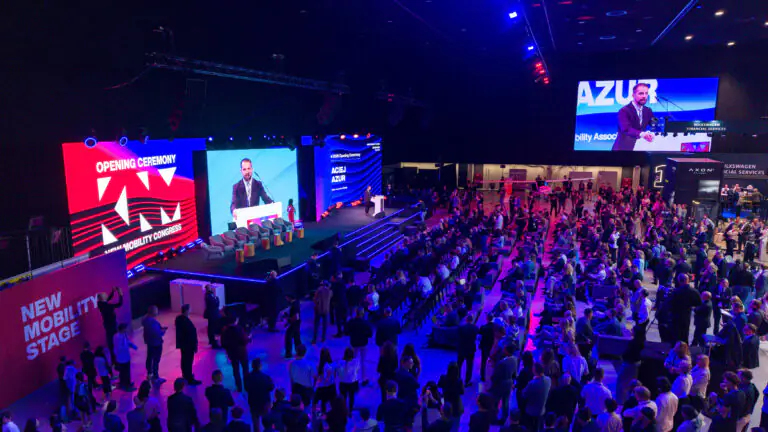
New Mobility Congress 2026 has come to a close, having brought together 9,500 stakeholders in the sustainable transition. Over 72 hours and across 250 programme sessions, participants developed recommendations essential to maintaining the competitiveness and boosting the innovativeness of the Polish economy. Which actions are most urgent, and what needs to change for these ambitions to translate into tangible benefits? Here are the key takeaways from New Mobility Congress 2026.
1. Predictable support for the BEV market must be reinstated
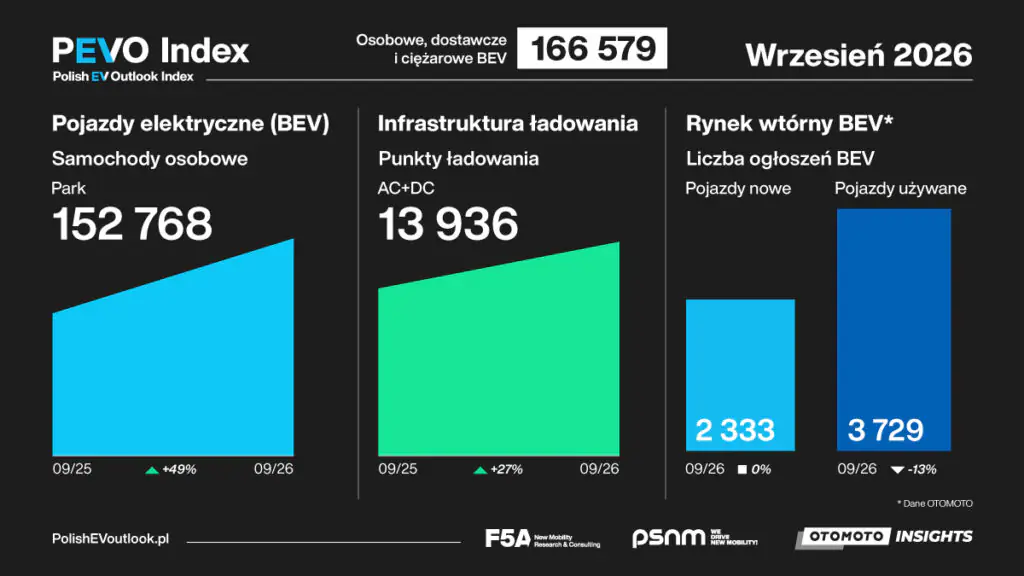
Support for the purchase and leasing of passenger BEVs must be ensured, while support for N2 and N3 category heavy-duty vehicles must be continued effectively. In 2026 (January–August), Poland was the only EU Member State to record a decline in new passenger BEV registrations (of 2.1%), while the EU market as a whole grew by almost 45%. Reviving demand is essential to developing infrastructure, attracting investment and building a market for new technologies. Support must be based on stable rules, continuous funding and efficient administration.
2. Social leasing must be introduced to reduce transport exclusion
Social leasing should open up electromobility to lower-income households, particularly people who need a car to commute to work and have no access to public transport. Such a programme has already been successfully implemented in countries including France, where approximately 150,000 beneficiaries have taken advantage of it to date. For social leasing to deliver results in Poland, it must be implemented at an appropriate scale, with simple eligibility criteria and transparent cost calculations. The programme could be funded through the EU’s Social Climate Fund.
3. A tax package for electromobility must be introduced
A key measure to support the development of zero-emission transport is an electromobility tax relief scheme modelled on the existing tax relief for robotics, covering vehicle purchases and the construction of charging infrastructure. The e-mobility sector’s tax package should also provide for full VAT deductions on the purchase and operation of company BEVs, including those used for both business and private purposes, the deduction of 100% of operating expenses as tax-deductible costs, and accelerated depreciation.
4. Charging must be more accessible and affordable
Simpler procedures are needed for installing private charging points, alongside support for publicly accessible charging stations in housing cooperatives, residential communities and at public buildings. Installation should be refused only where genuine technical obstacles exist. VAT and distribution costs for public charging should be reduced, and charging infrastructure should be temporarily exempted from property tax. Common payment and roaming standards should make it easier to use different charging networks while ensuring transparent pricing.
5. Mobility must be integrated with energy security
More efficient grid connections, the expansion of electricity networks and energy storage, and access to competitively priced renewable energy are essential. Smart charging should become part of the flexibility services market. Electromobility can help reduce peak electricity demand, improve the utilisation of renewable energy and strengthen energy resilience.
6. The EMP project must be leveraged to stimulate industry in Poland
The state’s involvement in establishing the ElectroMobility Poland technology hub in Jaworzno should translate into the development of domestic suppliers, engineering capabilities, R&D and intellectual property. Companies must be given access to financing and certification for new products. At the same time, support is needed for reinvestment in existing facilities. This stimulus should cover batteries, electronics, charging stations, software, remanufacturing and recycling. The investment must ultimately generate greater domestic value added and ensure that more contracts remain in Poland.
7. The Polish Mobility Code must be translated into domestic implementation
At New Mobility Congress, representatives of the Ministry of Digital Affairs and the Ministry of Science and Higher Education announced the Polish Mobility Code initiative, which brings together the potential of digitalisation, science, research and development to create Polish technologies for new mobility. To fully harness the potential of the automotive sector’s transformation, a shared agenda is needed for industry, universities and research institutes in AI, autonomous technologies, intelligent transport systems and cybersecurity.
8. The transformation of Poland’s TSL sector must be accelerated
The first agreement signed at New Mobility Congress by the National Fund for Environmental Protection and Water Management (NFOŚiGW) to co-finance electric heavy-duty vehicles (eHDVs) should pave the way for the efficient conclusion of further agreements and disbursement of funds under the programme supporting the purchase of zero-emission N2/N3 vehicles. Preferential road toll rates are needed, along with an exemption for electric trucks from the motor vehicle tax. Priority should be given to supporting the expansion of charging hubs for eHDVs, streamlining grid connection procedures, reducing fixed charges for contracted capacity, and accelerating the disbursement of funding under charging infrastructure support programmes.
9. Local authorities must be better equipped to develop sustainable mobility
Stable funding for zero-emission public transport and tools to implement sustainable mobility plans must be provided. Spatial planning in cities and regions should be integrated with transport development to improve access to places of residence, work, education and services, while counteracting transport exclusion. A coherent mobility system requires coordinated connections and timetables, integrated fares, and the development of hubs that enable convenient transfers between modes of transport. It should also provide safe walking and cycling routes, as well as access to micromobility and shared mobility services. On routes and in areas with limited public transport access, demand-responsive transport should also be developed.
Urban policies, including clean transport zones, should reduce pollution and noise while improving residents’ health and quality of life. Cities can also play a leading role in implementing and testing autonomous transport solutions, particularly buses, rail vehicles and uncrewed aerial vehicles.
10. The transformation of strategic transport sectors must be accelerated
Aviation, rail, ports and the maritime economy should be treated as strategic components of Poland’s mobility system, security and competitiveness. Long-term programmes are needed to modernise infrastructure, digitalise and decarbonise these sectors, develop domestic technological capabilities, advance electric propulsion for training aircraft and short-sea shipping, and ensure stable investment conditions.
In rail transport, priorities should include capacity, interoperability, the development of high-speed connections and freight transport. The aviation sector needs infrastructure modernisation, the development of new technologies and fuels, particularly sustainable aviation fuel (SAF), and measures to strengthen its competitiveness and resilience. Dual-use solutions and zero-emission propulsion technologies for aviation, maritime and land-based applications used by the military and uniformed services supporting the armed forces must also be developed.
KOMPAS 2035
Many of the recommendations outlined above are reflected in KOMPAS 2035, the strategy for the transformation of Poland’s automotive industry presented at New Mobility Congress 2026. It should serve as the starting point for developing a long-term industrial policy for Poland’s automotive sector. The key priority is to translate the objectives identified in the strategy into a concrete implementation plan covering support instruments, funding sources, a timetable and a clear division of responsibilities between public administration, industry and the R&D sector.
The priority should be to create conditions conducive to retaining existing investment in Poland and attracting new investment, while developing domestic capabilities in areas with growing value added, such as electromobility, software, automation and autonomous technologies. At the same time, Poland’s domestic supply chain must be strengthened, R&D spending increased, workforce skills developed, and competitive energy costs and reliable energy availability ensured for industry.
Implementing KOMPAS 2035 requires a permanent cooperation mechanism between public administration and the automotive sector, enabling progress towards the strategy’s objectives to be monitored and support instruments adjusted to changing market conditions. The strategy must not remain a document setting out broad directions. It should result in a coordinated action programme that transforms Polish industry towards modern manufacturing, innovative technologies and advanced capabilities.
Download the PDF: Recommendations Following New Mobility Congress 2026 »